How to Subpoena NYDFS-Regulated BitLicense Entities for Transaction Logs and IP Headers
By StonePath Investigations, LLC · NYS-licensed PI firm · CAMS, CFE, TRM CI
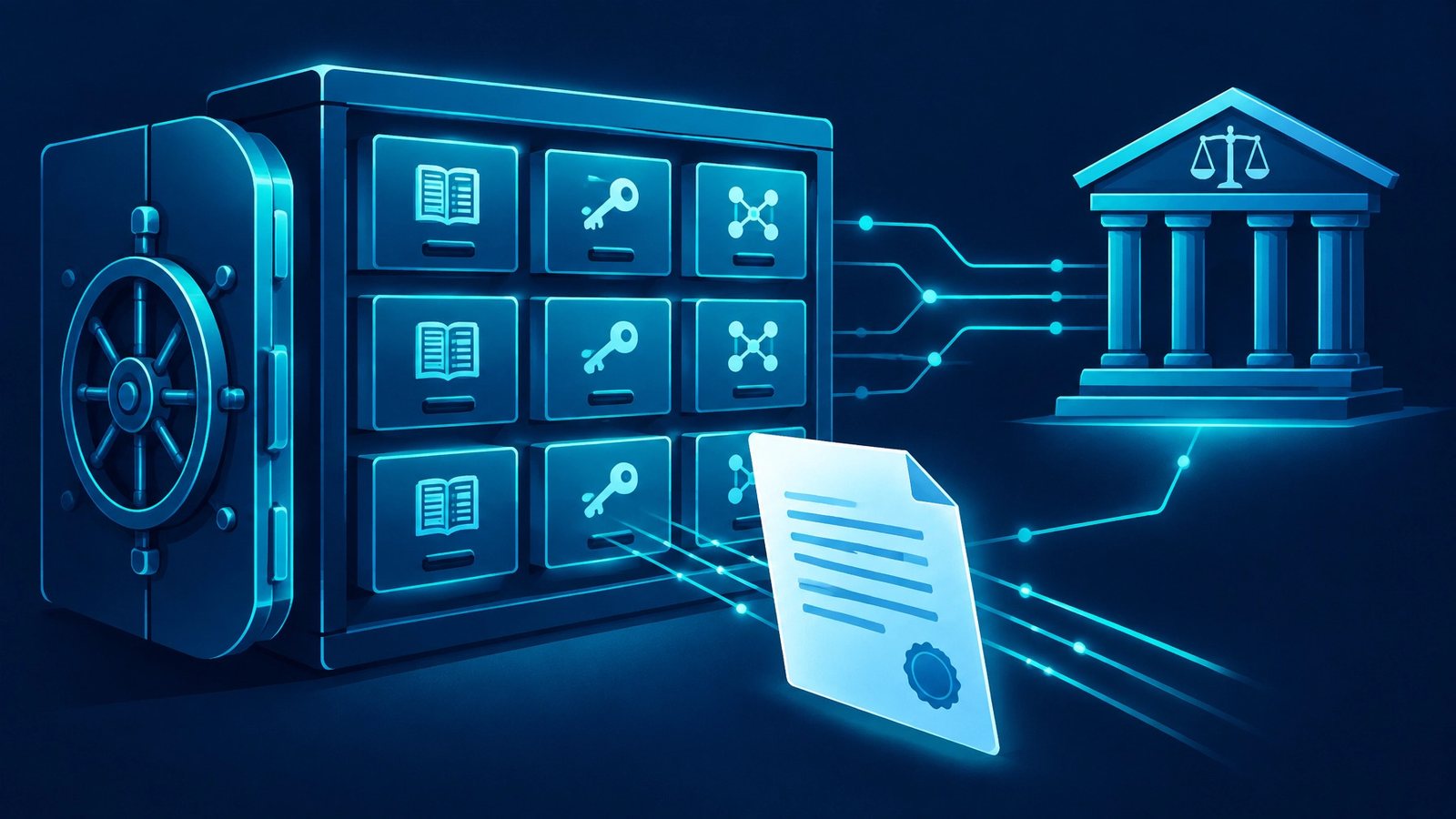
Discovery against a crypto exchange is not a coin flip. When the exchange holds a New York BitLicense, its recordkeeping obligations are written into regulation, and those obligations shape exactly what a subpoena can realistically reach.
That is the practical advantage most litigators overlook. An exchange operating under 23 NYCRR Part 200 is required by the Department of Financial Services to maintain its books and records in a defined way, for a defined period, in a defined format. The regulation does the preservation work that private litigants otherwise have to demand after the fact.
This article walks through what Part 200 requires, what those requirements mean for discovery, how to draft the subpoena, and the limits that apply.
What Part 200 actually requires
Part 200 is New York's virtual currency business framework. For a litigator, the operative provisions are the books-and-records rules.
Retention. Licensees must maintain all books and records necessary to record and document their business activities, including transaction records, general ledgers, bank statements, and compliance documentation, for at least seven years from creation. The retention obligation runs from the date of creation, which matters when a dispute spans years.
Format. Records must be maintained in their original or native format. That provision matters more than it first appears: a native-format transaction log preserves the metadata that a re-keyed spreadsheet would strip away, including identifiers that later become the thread connecting an account to an address.
Availability. Licensees must make records available to the Department immediately upon request. That obligation runs to the regulator, not to private parties, but it establishes the institutional posture: these are entities built around examinable records.
Transaction detail. Part 200's transaction-record provision requires documentation of transaction details, including recipient and account information and transaction amounts and dates, for covered activity. Read the provision itself rather than relying on summaries; the details matter for drafting requests.
One caution: some analyses cite a separate transaction-information section alongside the books-and-records provision. Verify the section numbering against the current regulation text before drafting, because Part 200 has been amended over time and a miscite in a subpoena is an avoidable embarrassment.
The compliance stack a litigator should know about
Beyond the core books-and-records rules, two adjacent layers matter when you sit down to draft requests:
KYC and account files. A licensed exchange onboards customers with identity verification. The resulting file typically includes the account holder's identifying information, verification records, linked payment details, and account history. This is usually the highest-value discovery target, because it converts a pseudonymous wallet into a named person.
Audit trails. New York's cybersecurity regulation for financial services companies, 23 NYCRR Part 500, separately requires covered entities to maintain audit trails designed to reconstruct events, including user activity and access logs, subject to defined retention periods. For a dispute involving account access, unauthorized transfers, or disputed instructions, that audit-trail layer can be decisive. Verify current section references before citing.
IP and session data. Login records, IP addresses, and session timestamps are typically retained within an exchange's operational systems and audit infrastructure. Their retention is governed by the entity's own policies layered on top of regulatory minimums, so availability varies. Request them explicitly rather than assuming.
The regulator's role, and its limits
Here is the distinction that prevents a wasted month: the licensee owes its records to NYDFS; a private litigant reaches those records through the discovery process directed at the entity.
You cannot call NYDFS and ask for an exchange's customer file. The Department examines licensees, enforces the regulation, and may share information through formal legal channels, but a private subpoena runs to the entity that holds the records, not to the regulator.
There is also a second, subtler limit. New York's Banking Law and related supervisory regulations protect certain NYDFS examination and investigation materials from disclosure, and courts treat those supervisory materials differently from an entity's ordinary business records. The practical consequence for discovery drafting: request the exchange's underlying business records, transaction logs, account files, and compliance documentation, and do not frame requests as seeking the Department's examination materials. Those are different document sets with different treatment.
Drafting the subpoena: specificity wins
A subpoena duces tecum to a BitLicense entity should be drafted around the record types the regulation already requires. The structure that works:
1. Identify the accounts. Name the specific account, the customer identifier if known, the relevant wallet addresses and transaction hashes, and the date range. A tracing report that connects deposit addresses to the target account gives the court the materiality showing.
2. Request by record type, not by conclusion. Effective requests ask for defined records: complete transaction logs in native format for the identified accounts and date range; KYC and identity-verification files; deposit and withdrawal addresses linked to the account; account statements; IP addresses and session/login records; device identifiers where retained; communications with the account holder; compliance or risk notifications relating to the account. Vague requests for "all records concerning cryptocurrency" invite objections and trimming.
3. Request native format and metadata. Part 200 already requires native-format retention, so asking for production "in native format with associated metadata preserved" aligns the subpoena with the entity's existing obligation rather than fighting a format battle.
4. Anticipate the objections. The predictable motions are overbreadth, relevance, customer privacy, confidentiality of compliance information, and burden. A subpoena anchored to identified accounts, specific date ranges, and enumerated record types survives those challenges far better than a broad one. Where third-party customer data is incidentally implicated, a protective order usually resolves it.
5. Preserve first. Send a preservation letter before the subpoena wherever timing permits. Exchange retention policies may exceed the regulatory minimum, but operational purges, legal holds, and data-lifecycle policies vary by entity, and a preservation notice eliminates the argument that requested data was deleted under routine policy.
Why regulated venues change the calculus
Compared with discovery against an unregulated venue or a foreign platform, a BitLicense entity offers three practical advantages:
Defined retention reduces the "we no longer have that data" response, because seven-year retention is a regulatory floor, not a courtesy.
Native-format obligation preserves metadata that would otherwise be lost, which matters for authentication and for tracing continuity.
Institutional posture: regulated entities maintain compliance functions, respond to legal process routinely, and are less likely to ignore or slow-walk a properly served subpoena.
None of this guarantees complete or clean production. It does mean the baseline expectation for what exists, and in what form, is set by regulation rather than by the entity's goodwill.
One caution on scope
BitLicense coverage is not always entity-wide. A group may hold the New York license for its New York operations while serving customers elsewhere under other registrations, or through unlicensed foreign entities. Before drafting, confirm which entity actually held the customer relationship, which records sit onshore, and whether the New York-regulated entity is the right subpoena target. Serving the wrong entity in a corporate group is a common and entirely avoidable misstep.
What to do with what comes back
Production is the midpoint, not the end. The KYC file must be connected to the on-chain record: does the deposit address in the transaction log match the address in the trace? Does the account timeline align with the theft timeline? Are there linked accounts or shared identifiers that expand the picture? That reconciliation, matching what the exchange holds against what the ledger shows, is where attribution moves from plausible to provable, and it is the work a structured investigative file supports before the subpoena is ever served. It is also the methodology StonePath Investigations applies to crypto investigations, organizing on-chain and off-chain records for counsel in cryptocurrency matters.
Honest limits
Regulatory retention does not guarantee completeness: retention floors apply to what the entity created and kept, not to what it should have recorded. Some entities hold a BitLicense only for a New York-facing portion of their business. Production can be narrowed by objections, delayed by motions, and complicated by foreign-data restrictions. And the regulator's examination files, as noted, sit outside an ordinary private subpoena.
None of that changes the core point: when the counterparty is NYDFS-regulated, the recordkeeping baseline is defined by regulation, and the discovery draft should be built on that foundation rather than on assumptions. Verify the current text of Part 200 and any related provisions before filing, because this article is educational context, not legal advice, and the regulation is the controlling authority.
If your matter needs an exchange subpoena built on a verified trace, the deposit addresses and account timeline should be documented before process is served. Contact StonePath Investigations, LLC to discuss litigation-ready forensic blockchain analysis for counsel.
Schedule a Free ConsultationReferences
- 23 NYCRR § 200.12, Books and records, Cornell LII
- Davis Polk, “New York's Final BitLicense Rule: Overview and Changes from the July 2014 Proposal,” June 2015
- Reuters Practical Law, “Virtual Currency Business Regulation (New York),” November 2023
- 23 NYCRR § 500.6, Audit trail, Cornell LII
- NYDFS, BitLicense framework materials
- 23 NYCRR § 200.13, Examinations, Cornell LII, the examination authority behind the Department's access to licensee records
- 23 NYCRR § 200.15, Anti-money laundering program, Cornell LII, the AML program obligation that generates much of the compliance documentation a subpoena targets
- 3 NYCRR § 7.2, Disclosure of confidential supervisory information, Cornell LII, the confidentiality framework that separates supervisory materials from an entity's own business records
- NYDFS, Final Adoption of 3 NYCRR Part 7, Information Subject to Confidential Treatment Under Section 36.10 of the Banking Law, December 2022, the rulemaking that explains the 36.10 protection discussed above
- New York Banking Law, New York State Senate consolidated laws, for section 36 and the confidentiality provision underlying Part 7