Internal Crypto Embezzlement: How New York Businesses Detect and Trace Unauthorized Payroll and Treasury Divergence
By StonePath Investigations, LLC · NYS-licensed PI firm · CAMS, CFE, TRM CI
Internal crypto diversion is not always a sophisticated attack from outside. Sometimes the risk sits inside a routine payment process: one person can edit a beneficiary file, access a wallet, or make a change that nobody independently checks.
For New York businesses that hold or transact in digital assets, the investigative task is to compare what the company authorized with what the blockchain records, and then establish, through separate evidence, who initiated the difference. A suspicious transfer is a lead, not a verdict.
New York also supplies the legal vocabulary for what follows the investigation. A diversion by someone entrusted with the property engages Penal Law § 155.05, where larceny includes withholding property from its owner. Civilly, a claim against a director or officer for misappropriation of corporate assets runs through Business Corporation Law § 720, which authorizes an action for an accounting and for the return of corporate property. The point is not that every internal exception becomes a criminal case. It is that the investigation should be built to answer the questions those causes of action ask: whose property was it, who held it, and what authorization existed.
The blind spot: trusted access can concentrate risk
Crypto fraud is often imagined as a compromised exchange account or an unfamiliar wallet draining funds from elsewhere. But treasury, payroll, and payment staff need legitimate access to do their jobs. That access can become a control weakness when the same person prepares instructions, changes destination details, executes transfers, and reconciles the books.
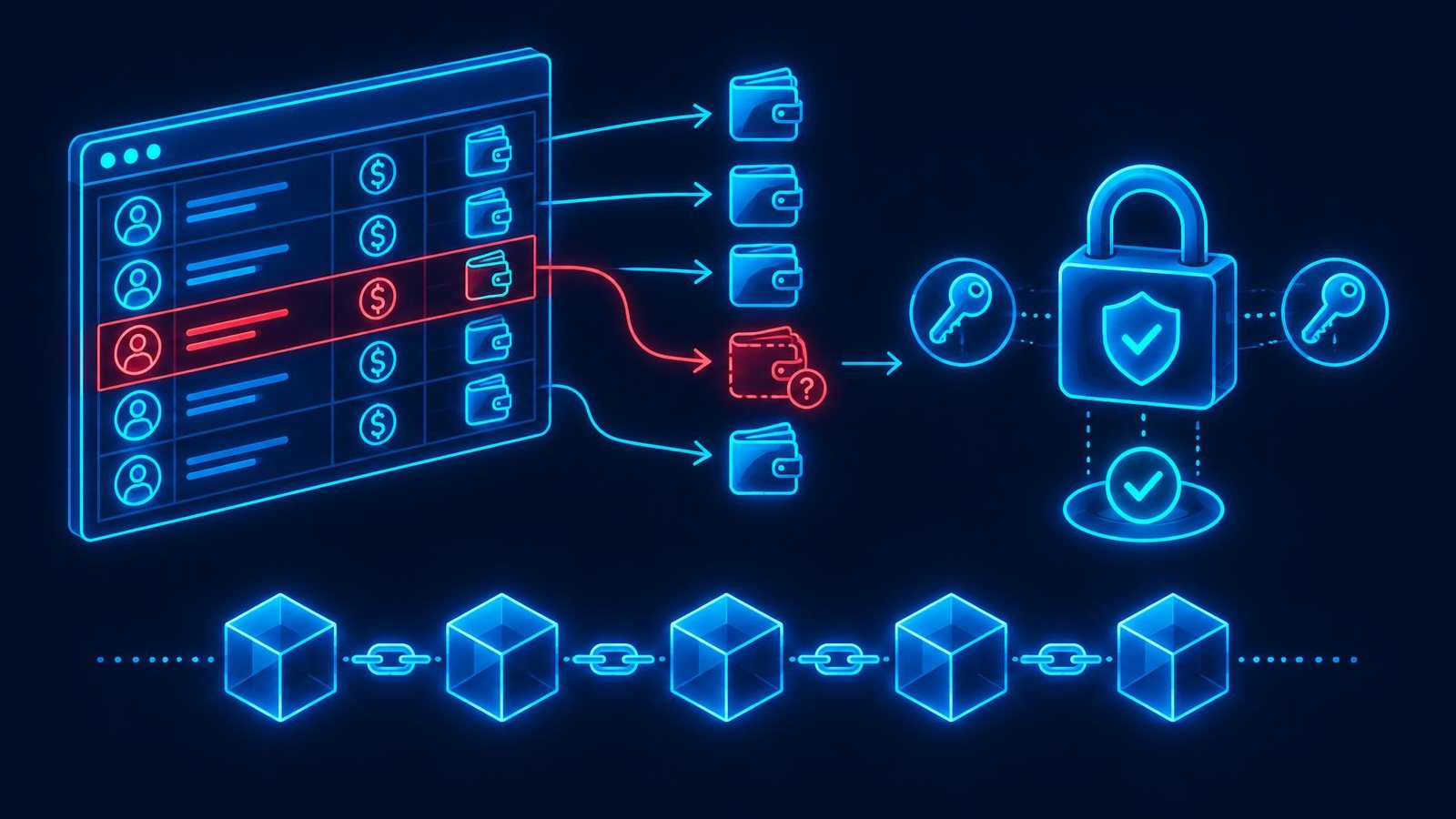
The issue is not that employees handle wallets. It is whether access and approval are sufficiently separated. Ask: Who can add a destination address? Who confirms it independently? Who can authorize and sign a transfer? Who reconciles the resulting transaction?
A reported Singapore case illustrates the mechanics, not a New York outcome. Channel NewsAsia reported that a payroll employee altered spreadsheets used for cryptocurrency and fiat payments, directing payments to wallets and a bank account she controlled. The reported conduct involved payroll records and payment controls, not a protocol exploit. The example is a reminder to examine the business workflow as closely as the blockchain.
How internal diversion can happen
Unauthorized payroll and treasury divergence may involve several types of process failure or misconduct:
Manual transfers outside the usual approval flow: An employee may initiate an “exception” payment that bypasses routine review.
Beneficiary or address substitution: A legitimate employee or vendor payment can be redirected to a different wallet while retaining a familiar name or payment description.
Spreadsheet or payment-file manipulation: Added rows, changed wallet addresses, or fabricated compensation items may survive review if approvers trust the preparer’s inputs.
Misuse of wallet authority: A person may use signing access to execute a transfer that was not approved, or alter multisignature signers or thresholds.
Vendor or kickback arrangements: A payment may appear operationally valid while the destination or underlying business purpose is not.
Split transfers: A larger movement may be divided into smaller amounts to avoid an approval threshold or draw less attention.
A multisignature wallet can reduce the chance that one person acts alone, but it is not a magic lock. If the same person controls multiple signer credentials, or approvers rely on an altered request or address book, the apparent safeguard may be weaker than it looks.
A detection framework: reconcile the instruction to the transaction
Start by defining the full asset perimeter. Maintain an inventory of company-controlled wallets, exchange accounts, networks, token contracts, and custodians. Record each account’s business purpose, assigned owner, authorized users, signers, and approval rules. Revisit the inventory whenever an account, wallet, signer, or token is added.
Then reconcile outgoing activity against independently retained business records. For each transfer, compare the payment request, beneficiary details, approval record, execution data, and accounting entry. Ask: What was approved? What was actually sent? Did the destination match the approved destination on the correct network?
Useful exception indicators include:
Transfers to new, unlabeled, or recently changed addresses
Payments split into amounts near or below approval thresholds
Transactions outside the normal payroll or treasury schedule
Repeated transfers through intermediate wallets, including peel-chain patterns
Funds moving out and then returning through another wallet or account
Changes to multisignature signers, approval thresholds, or delegated authority
Newly granted token approvals or contract permissions
These are flags for review, not findings of wrongdoing. A late-night transfer may be legitimate; a configuration change may reflect an approved operational update. The point is to identify exceptions, preserve their context, and test them against authorization records.
A wallet audit also needs to account for the technical details behind the balance. Token symbols alone are not reliable identifiers; reconcile tokens by contract address and network. Smart-contract interactions can produce internal transfers or event logs that a basic list of top-level transactions may not show. Bitquery’s wallet-audit guide discusses defining scope, extracting transaction history, reconciling balances, and documenting exceptions. Useful disciplines for building a review that can be repeated and checked.
Where New York procedure shapes the evidence
Two New York considerations affect how the investigative record should be assembled, and both reward discipline early.
The first is evidentiary: internal payroll files, approval histories, ERP exports, and messaging records have to enter a courtroom as business records, which is a standard originals and exports with intact metadata clear more easily than a narrative spreadsheet rebuilt after a dispute surfaces. The framework, and its limits, are set out in our companion piece on chain of custody.
The second is the practical reality that most New York businesses pursue these matters through counsel-led internal investigation rather than a public filing. That choice affects privilege, employment obligations, and the sequence of device collection. Counsel should be in the loop before an employee's laptop is imaged, and the preservation plan should distinguish what is collected for the company's own understanding from what is collected for production.
Why the blockchain is a powerful audit record, and not the whole case
Once sufficiently confirmed, blockchain transactions provide a persistent, timestamped record that can be independently checked. A transaction hash identifies a specific transaction; network data can show the sending and receiving addresses, asset, amount, and related contract activity.
That makes the ledger valuable when compared with internal systems. An accounting entry can be edited or omitted. The public ledger does not record the company’s approval process, but it can show whether an asset left a known wallet and where the transaction proceeded.
The limit matters just as much. An address is not a name. On-chain data can show movement; it does not, by itself, establish who controlled a wallet, who entered a payment instruction, or why the transfer occurred. Attribution requires off-chain evidence: access logs, credentials, device records, communications, approval histories, payroll files, and other relevant business records. Value accounting likewise requires reconciliation against company records and consistent valuation dates.
A careful investigative methodology connects transaction analysis with those off-chain records rather than treating a wallet graph as a complete account of conduct.
Incident response: preserve first, confront later
When internal diversion is suspected, evidence can disappear faster than funds. System logs may roll over; accounts can be changed; a device can be wiped. Coordinate early with counsel, HR, security, and finance to determine preservation targets and a controlled response.
Depending on the systems involved, preservation targets may include:
Wallet and exchange transaction histories, signer records, and configuration history
Identity and access-management logs, MFA events, VPN records, and cloud telemetry
Endpoint and device records, collected and preserved under applicable policies and law
Payroll, ERP, treasury, approval, ticketing, email, and messaging records
Address-book changes, payment-file versions, and reconciliation workpapers
Preserve originals or reliable exports, document collection methods and timestamps, and maintain a chain-of-custody record. Avoid wiping devices or broadly altering accounts before relevant evidence is preserved. Counsel can help coordinate the investigation, assess privilege considerations, and work with HR on employment, privacy, and device-handling issues. Any containment steps (such as limiting access, pausing transfers, or rotating credentials) should be planned so they reduce risk without unnecessarily destroying evidence or alerting a subject before preservation is addressed.
The working theory should remain open: an employee may have acted improperly, credentials may have been compromised, or an outside actor may have used an employee’s access. Test alternatives before drawing conclusions.
Building a defensible internal investigation
A clear investigative record separates observed facts from interpretations. It should allow a reviewer to follow the path from company authorization to blockchain movement and understand the basis for each conclusion.
A useful work product may include:
1. A wallet and account inventory showing the scope examined, owners, networks, and relevant control changes.
2. A transaction schedule listing hashes, timestamps, assets, amounts, source and destination addresses, fees, and relevant subsequent movements.
3. An approval comparison identifying where payment requests, approvals, execution details, and ledger entries match, or do not.
4. A configuration and access chronology documenting signer changes, permission updates, relevant sessions, and available device or system evidence.
5. An attribution analysis that explains the evidence linking people, devices, credentials, or accounts to activity, while identifying gaps and alternative explanations.
6. A loss analysis that distinguishes amounts transferred, amounts returned or otherwise recovered, and the valuation method and dates used.
The report should identify its data sources, scope, assumptions, and unresolved exceptions. Precision is more useful than certainty performed for its own sake.
Prevention: separate the duties, then test the separation
The most durable controls make it difficult for one person to create, authorize, execute, and conceal a payment. Use segregation of duties: separate payment preparation from approval, wallet signing, custody, and reconciliation. Require two-person approval for withdrawals and independent verification of new or changed destination addresses.
Review signer rosters and thresholds periodically. Separate hardware-wallet custody from transaction preparation, and ensure that signer credentials are genuinely independent. Reconcile wallets and exchange accounts against approved instructions and the general ledger on a regular, risk-appropriate schedule. Include configuration changes and token approvals in that review, not only completed transfers.
Controls should be tested, not merely documented. Can one user change a beneficiary and approve the change? Can a payment proceed if an independent approver is unavailable? Does the reconciliation catch a transfer that never appeared in the internal ledger? Answers to these questions improve the system long after a particular investigation closes.
Suspicion is not proof
A transfer to an unfamiliar address, a threshold change, or an unusual payroll entry may justify investigation. None alone proves embezzlement, intent, or individual attribution. False accusations can carry serious employment and legal consequences, so findings should be supported by corroborated evidence and reviewed with appropriate counsel.
This article is educational and is not legal advice. The strategic objective is disciplined documentation: preserve what happened, distinguish on-chain movement from off-chain attribution, and strengthen controls so future exceptions are easier to detect and explain.
If you suspect funds left a company wallet without proper authorization, preserve the records before anyone is confronted. Contact StonePath Investigations, LLC to discuss a confidential, counsel-coordinated review of the on-chain and internal record.
Schedule a Free ConsultationReferences
- New York Penal Law § 155.05, Larceny; defined, New York State Senate consolidated laws
- CPLR 4518, Business records, the framework referenced in the evidentiary section above
- New York Business Corporation Law § 720, Action against directors and officers for misconduct, 2025 New York Laws
- ACFE, Occupational Fraud 2026: A Report to the Nations, global occupational-fraud data on detection methods, controls, and loss patterns
- BIA: Detect Insider Misappropriation in Crypto Treasury
- Bitquery: How to Audit Blockchain Wallets
- Channel NewsAsia: Payroll employee who cheated S$5.7 million from cryptocurrency trading platform jailed
- AML Crypto: Insider Crypto Theft, How to Identify a Rogue Employee or Contractor