Hidden Crypto in Divorce: Tracing Undisclosed Wallets Before the Disclosure Deadline
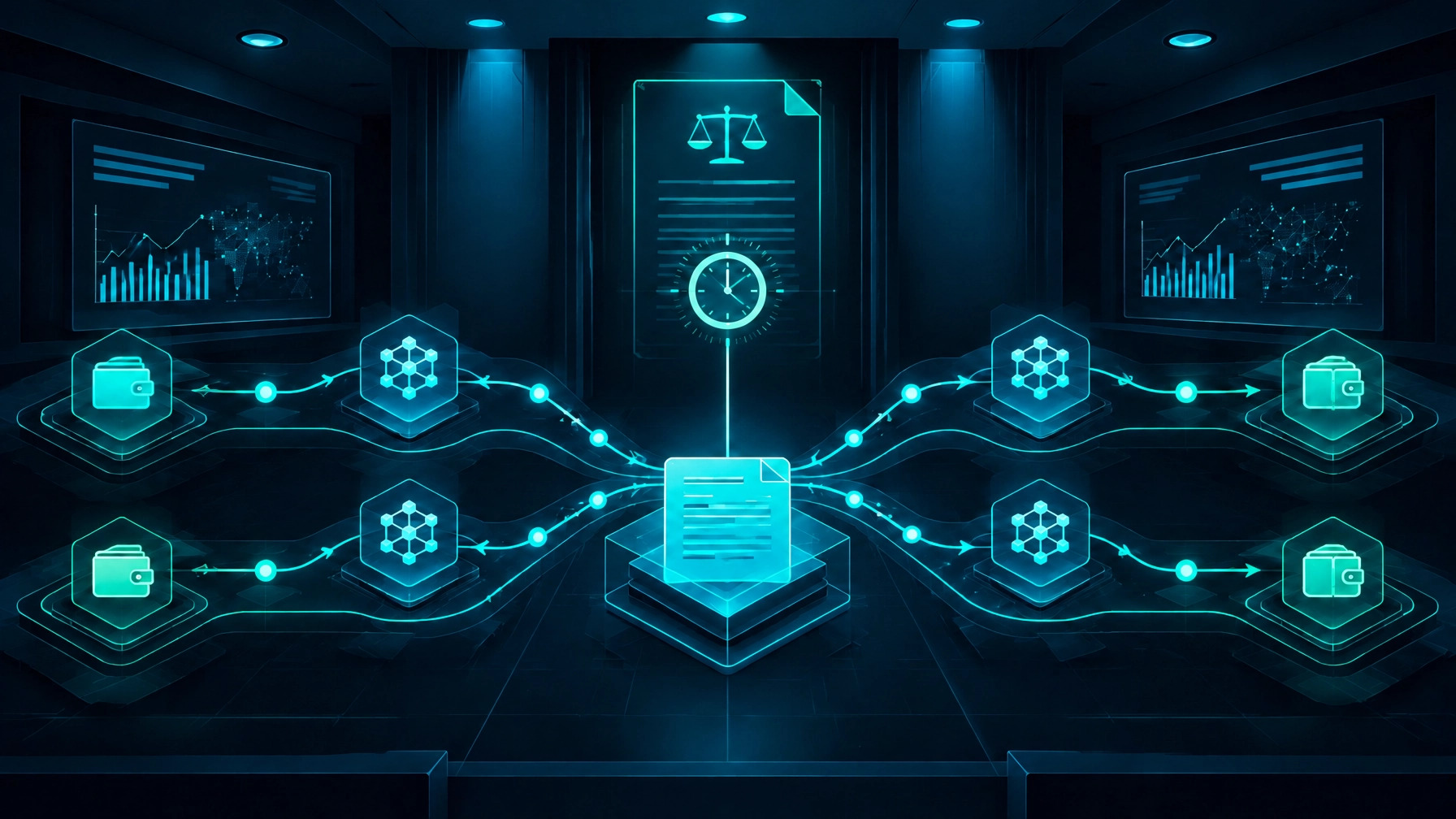
Cryptocurrency does not fit neatly into the standard financial affidavit. There may be no consolidated statement, no central registry, and no institution holding every relevant record. A spouse may hold assets through an exchange account, a hardware wallet, a browser wallet, a decentralized finance protocol, or a stablecoin balance that never appears on a bank statement.
That creates a timing problem. The issue is not simply whether digital assets exist. It is whether counsel can identify, preserve, trace, and properly characterize them before an affidavit is signed and the discovery deadline passes.
The practical lesson is straightforward: the earlier the investigative record is built, the less likely a later-discovered wallet becomes a dispute about credibility, completeness, and evidentiary prejudice.
Why the Standard Financial Affidavit Misses Digital Assets
A conventional financial affidavit is designed around recognizable account relationships: banks, brokerages, retirement plans, real estate, business interests, and liabilities. Cryptocurrency can sit outside each category.
A disclosed bank account may show a wire to a virtual asset service provider, but not the wallet receiving the withdrawal. A tax return may report digital-asset gains, but not identify the current location of the proceeds. A hardware wallet may be stored without any monthly statement. A DeFi position may consist of a smart-contract interaction, liquidity-provider tokens, or staked assets that never appear in a conventional account summary.
The custody structure matters:
Centralized exchange accounts may produce account statements, KYC records, login history, deposits, withdrawals, and linked wallet data.
Self-custody wallets may have no third-party custodian capable of producing a conventional account statement.
DeFi positions may be represented by smart-contract calls, staking records, lending balances, or liquidity-pool positions.
Stablecoins may function as a store of value or transfer medium without appearing as fiat currency in a bank account.
Offshore or lightly documented platforms may create additional service touchpoints and preservation challenges.
A wallet address is not an account statement. A screenshot is not a complete financial record. The difference is not merely technical; it affects what must be requested, authenticated, and explained.

The Disclosure Deadline Is an Evidentiary Event
Financial affidavits are often prepared from a party's own knowledge and signed early in the proceeding. That creates a practical distinction between an asset that was omitted from the original disclosure and an asset discovered later through blockchain analysis.
Once the affidavit is executed, the question changes. It is no longer only: What cryptocurrency exists?
It may also become:
What did the signing party know when the affidavit was prepared?
Was the wallet omitted, misunderstood, or created later?
When was the address first identified by counsel or an investigator?
Was a transaction hash available before the deadline?
Did the party have an obligation to supplement the disclosure?
Did funds move after notice of the investigation or discovery request?
Can the omission be reconciled with bank records, tax filings, device evidence, or exchange records?
A later-discovered wallet can therefore become an evidentiary problem, not just an asset problem. Counsel may need to establish the sequence of the original disclosure, the discovery of the wallet, requests for supplementation, and any subsequent transfer activity. Depending on the jurisdiction and procedural posture, the consequences may involve a motion to compel, supplemental production, credibility findings, cost-shifting, sanctions, or an adverse inference. None is automatic. Each depends on the governing rules, the quality of the record, and the demonstrated prejudice.
The durable objective is not to create a dramatic accusation. It is to preserve a defensible timeline showing what was known, when it was known, and what remained unresolved at each stage.
Red Flags to Test, Not Assume
Red flags are investigative leads. They are not proof of concealment, ownership, or bad faith.
Practitioners should test for:
1. Unexplained fiat outflows to exchange deposit addresses, payment processors, OTC desks, or unfamiliar financial intermediaries.
2. Hardware-wallet evidence, including purchase records, device inventories, shipping confirmations, or backup documentation.
3. Seed backups or wallet references found in discovery, email, cloud storage, password managers, or device applications. These must be handled under lawful, court-approved protocols; a private key is not ordinary documentary evidence.
4. Recurring small transfers to a friend, relative, business associate, or newly created address. Repetition can matter more than any single amount.
5. Tax filings showing digital-asset gains without a corresponding disclosed exchange account, wallet, or asset schedule.
6. Abrupt consolidation of balances shortly before or after separation, service, filing, or the disclosure deadline.
7. Newly created wallets receiving value from known exchange accounts or previously identified addresses.
8. Loans or advances to family members that never appear as receivables or other assets.
9. Stablecoin conversions that reduce the visibility of value in ordinary bank records.
10. DeFi interactions involving lending, staking, liquidity pools, bridges, or wrapped assets absent from the financial affidavit.
The analytical question is not simply, "Was money transferred?" It is: What was promised, what digital asset was actually sent, who controlled the receiving address, and what happened to the value afterward?
Testing these red flags against independent records is what turns suspicion into a structured investigative issue.
What a Forensic Trace Actually Produces
A professional cryptocurrency trace should produce more than a list of wallet addresses. It should create a reproducible evidentiary map.
Depending on the available records, the work may include:
identifying address clusters and explaining the basis for each clustering conclusion;
mapping deposits, withdrawals, swaps, bridges, staking, lending, and consolidation;
identifying exchange and other service touchpoints;
recording each relevant transaction hash, asset, network, timestamp, and amount;
comparing on-chain activity with bank statements, tax records, device evidence, and communications;
distinguishing transfers from sales, swaps, fees, and contract interactions;
documenting uncertainty where ownership or control cannot be established.
Date discipline is essential. The value of an asset at separation is not necessarily its value on the affidavit date, trial date, or today's date. A defensible schedule should identify the legally relevant valuation dates and show the units held, asset type, network, custody location, transaction chronology, applicable price source, and any restrictions such as staking or lockup.
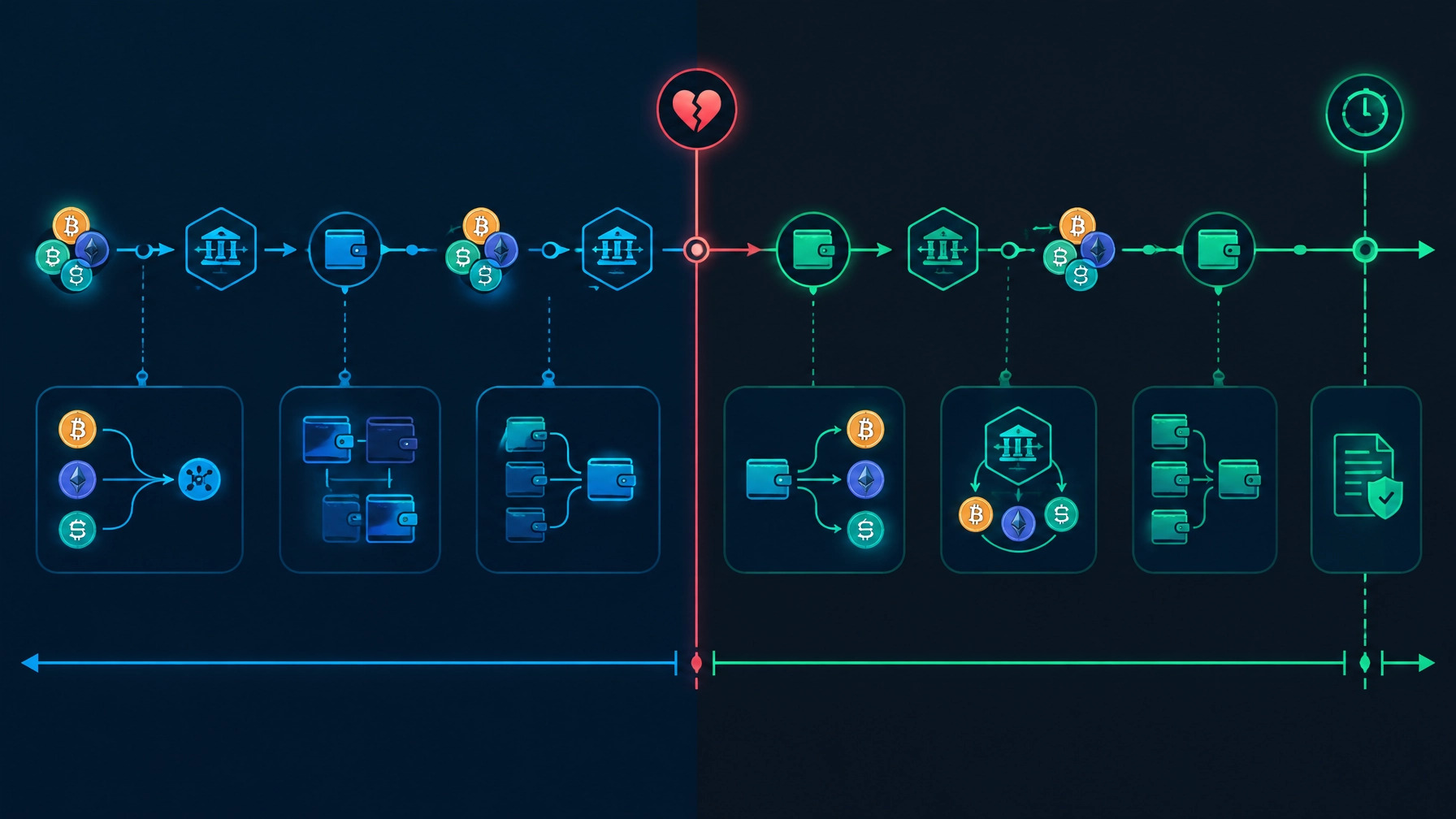
A transfer made two days before separation may carry different characterization questions from a transfer made two days after separation. A wallet created after separation may still receive assets acquired earlier. A stablecoin balance may preserve value while the underlying asset changes. The schedule must show these distinctions rather than flattening every movement into a single balance.
For an example of the broader investigative methodology used to organize wallet relationships, transaction flow, and service touchpoints, see StonePath Investigations' overview of blockchain forensics.
Preservation Comes Before Interpretation
Digital-asset evidence can change quickly. Exchange retention periods vary. Devices are replaced. Wallet applications are deleted. Cloud accounts are synchronized or overwritten. Most importantly, a self-custodied asset can move immediately after the holder receives notice of a dispute.
A preservation letter should identify the relevant preservation targets with enough specificity to be useful. These may include:
centralized exchange accounts and complete transaction exports;
bank, card, ACH, and wire records;
hardware wallets and device inventories;
software-wallet applications and browser extensions;
seed backups, QR codes, and recovery documentation;
password-manager records and authenticator applications;
tax returns, digital-asset tax software, and accountant files;
OTC confirmations and peer-to-peer transaction records;
emails, texts, cloud storage, and communications concerning transfers;
DeFi, staking, lending, bridge, and decentralized-exchange activity.
Document the first observation of a wallet or address. Record who identified it, when it was identified, where it appeared, and what supporting material accompanied it. Preserve original exports and metadata, separate originals from working copies, and maintain a chain-of-custody log for collected devices and files.
The risk is not limited to intentional destruction. Moving assets after notice, deleting an application, or replacing a device can create questions about spoliation, even when the party claims the action was routine. A preservation protocol provides long-term utility by fixing the evidentiary condition of the matter before interpretation begins.

The Limits of Blockchain Attribution
Blockchain records are powerful, but they do not eliminate the need to prove ownership or control.
A public ledger may establish that an address received funds. It does not, by itself, establish who controlled the private key, whether the address belonged to a spouse, or whether the funds were held for someone else. Attribution may require exchange KYC records, account-access history, device evidence, IP information, wallet behavior, tax records, communications, or admissions.
Other complications include:
joint control of an exchange account or wallet;
commingling of marital and separate funds;
transfers made as gifts or loans;
business or trust ownership;
assets held in a spouse's name for another person;
shared devices or shared recovery materials;
transfers through custodians that obscure the beneficial owner.
The correct conclusion may therefore be narrower than "the spouse owned this wallet." It may be that a known account funded an address, that the address interacted with a particular protocol, or that the evidence is consistent with control but insufficient to prove it conclusively.
That distinction strengthens the report. Investigative clarity depends on separating what the ledger proves, what corroborating evidence supports, and what remains an attribution hypothesis.
What Counsel Should Request Before the Deadline
Focused discovery should request both traditional financial records and digital-asset records. At minimum, counsel should consider requesting:
all wallet addresses and public keys used or controlled;
centralized-exchange account records and complete exports;
KYC, linked-address, login, device, and account-recovery records;
hardware-wallet, software-wallet, and backup inventories;
bank, brokerage, card, ACH, wire, and payment-app records;
tax returns, Form 8949, Schedule D, and digital-asset tax reports;
OTC confirmations and peer-to-peer transaction records;
DeFi, staking, lending, liquidity-pool, bridge, and DEX records;
communications concerning cryptocurrency, loans, gifts, and transfers to relatives;
records identifying assets held for another person or entity.
The goal is not to demand raw technical material without structure. It is to create a record that can connect fiat funding, service touchpoints, wallet activity, valuation dates, and control evidence in a disciplined sequence.
A disclosure deadline is therefore more than a calendar entry. It is the point at which incomplete knowledge can become a problem of proof. Early preservation, careful date mapping, and restrained attribution give counsel a stronger factual foundation for whatever legal conclusions the court must later draw.
If your matter involves undisclosed digital assets and an approaching disclosure deadline, early preservation and a disciplined trace make the difference. Contact StonePath Investigations, LLC for a confidential consultation.
Schedule a Free Consultation