Cross-Border Crypto Asset Recovery: Navigating MLATs, Foreign Exchanges, and International Warrants

When cryptocurrency crosses a border, the blockchain does not stop recording. Legal authority often does.
That distinction defines cross-border crypto asset recovery. A transaction hash may identify the movement of digital assets, but recovery usually depends on preserving evidence, locating a legally reachable service touchpoint, obtaining appropriate relief, and coordinating the authorities or courts that can act in the relevant jurisdiction.
For attorneys and private clients, the practical question is not simply, “Where did the bitcoin go?” It is:
What was transferred?
Which entity controlled or intermediated the next step?
Where are the relevant records located?
Which jurisdiction can compel disclosure or restraint?
What procedural vehicle will produce evidence that can be used later?
This article presents a procedural workflow for recovery after funds move across borders. It is educational and does not replace jurisdiction-specific legal advice.
Step One: Preserve Evidence Before Pursuing Relief
Recovery strategy begins with preservation, not pleadings.
Digital assets can move through multiple wallets, exchanges, bridges, decentralized applications, and fiat on-ramps in a short period. Meanwhile, account records may be subject to retention schedules, internal investigations, privacy rules, or routine data changes. The first objective is therefore to preserve both the blockchain record and the surrounding off-chain evidence.
On-chain preservation targets
The investigative record should ordinarily capture:
Wallet addresses and network identifiers
Transaction hashes, block heights, and confirmation status
Token contract addresses and asset denominations
Sending and receiving addresses
Exact transaction timestamps, preferably in UTC
Smart contract calls, event logs, and decoded function parameters
Bridge deposits, withdrawals, minting, burning, and message identifiers
Relevant explorer URLs and downloadable transaction data
Screenshots or exports showing the state of the record at the time of review
The difference is not between “public” and “private” evidence. It is between evidence that can be independently reconstructed and evidence that has been preserved with a documented method.
Off-chain preservation targets
Counsel should also identify and preserve:
Exchange account statements and deposit addresses
Know-your-customer and beneficial-owner records
Login history, IP addresses, device identifiers, and session data
Internal account ledgers and transaction classifications
Withdrawal requests, compliance reviews, and account restrictions
Customer-support communications and case numbers
Emails, messaging applications, websites, invoices, and inducement materials
Bank records, payment processor data, and fiat settlement information
Records from OTC brokers, custodians, payment providers, and stablecoin issuers
A preservation notice should be targeted. “All records relating to cryptocurrency” is broad enough to be ignored and vague enough to create later disputes. Identify the account, wallet, date range, transaction hashes, suspected actors, and categories of data.
A structured blockchain investigation should generate a repeatable evidence package: source data, acquisition date, analyst notes, methodology, calculations, and a clear distinction between observed facts and investigative inferences. StonePath’s public materials describe this type of structured intelligence reporting and documentation in its overview of crypto investigations.
Step Two: Map the Foreign Exchange Touchpoints
A wallet address is not automatically a defendant, custodian, or enforcement target. It is a lead.
The next task is to determine where a legally meaningful touchpoint appears in the flow. A touchpoint may include:
A custodial exchange receiving the assets
A broker or OTC desk facilitating conversion or settlement
A hosted wallet provider controlling customer access or records
A bridge or decentralized application executing a cross-chain interaction
A stablecoin issuer with contractual or technical intervention powers
A fiat on-ramp or payment processor connecting digital assets to bank funds
A bank or money services business receiving or disbursing fiat proceeds
The investigation should ask what happened immediately before and after each service interaction.
Did the exchange receive assets into a deposit address associated with a customer account? Did the funds pass through a mixer, bridge, or liquidity pool before reaching a regulated platform? Did a stablecoin transfer create a preservation or freeze opportunity? Was the apparent exchange address actually a hot wallet, omnibus address, or service-controlled consolidation wallet?
This is where cryptocurrency tracing must be paired with attribution analysis. A transaction graph can show movement. It does not, by itself, establish ownership, control, knowledge, or liability.
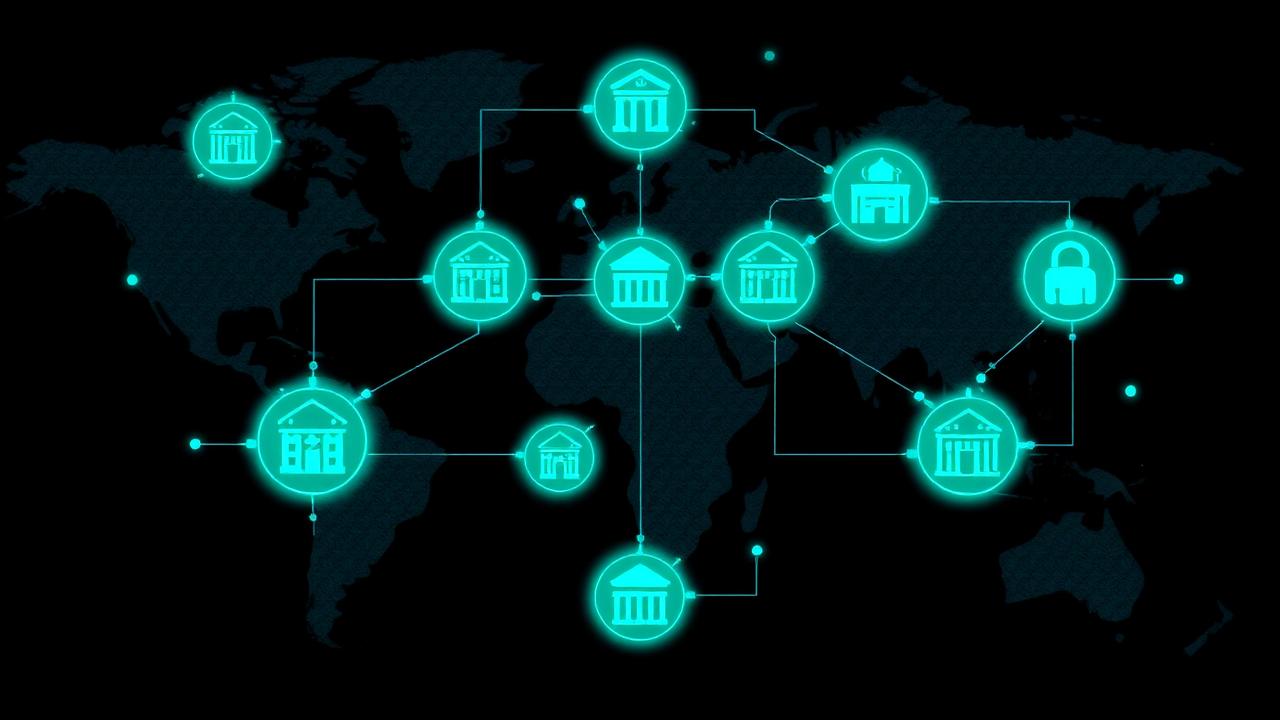
Build a jurisdiction matrix
For every material touchpoint, create a matrix recording:
Entity: legal name, trading name, parent company, and affiliates
Location: incorporation, licensing, headquarters, and relevant operating entity
Control: custody, account control, or merely technical processing
Records: likely location of customer, transaction, and compliance data
Legal route: informal request, subpoena, court order, MLAT, or letters rogatory
Urgency: risk of withdrawal, account closure, or further dissipation
Relief: preservation, disclosure, freezing, seizure, or recognition
This prevents a common error: treating the exchange’s brand name as the jurisdictional answer. The relevant entity may be a subsidiary, licensed affiliate, or local operating company.
Step Three: Choose the Correct Legal Cooperation Route
The legal mechanism depends on the proceeding and the relief sought. Criminal and civil routes may proceed in parallel, but they are not interchangeable.
MLATs: the criminal cooperation channel
A Mutual Legal Assistance Treaty is a government-to-government mechanism for criminal matters. It can support requests for electronic evidence, testimony, searches, seizures, asset restraint, and forfeiture, subject to the treaty and the requested country’s law.
In the United States, the Department of Justice Office of International Affairs functions as the central authority for U.S. mutual legal assistance. The DOJ explains the role of MLATs and central authorities in its Mutual Legal Assistance Treaties of the United States.
Private counsel cannot issue an MLAT request independently. A private client may provide evidence to law enforcement, but the formal request must come through the competent government authority.
A useful MLAT package should allow the requested state to understand:
The predicate offense and procedural posture
The identified suspect, account, or asset
The connection between the offense and the requested records or property
The specific assistance requested
The relevant transaction hashes, addresses, dates, and amounts
The legal authority supporting restraint or production
Any requirements concerning authentication, translation, confidentiality, or chain of custody
An MLAT request is not a substitute for investigation. It should not ask a foreign authority to discover the case from scratch. It should convert established investigative facts into a precise request for assistance.
The StAR/UNODC Asset Recovery Handbook frames asset recovery as a sequence involving intelligence, tracing, securing assets, court proceedings, enforcement, and return. That sequence matters: tracing without restraint can become an expensive map to a disappearing asset.
Letters rogatory and Hague evidence requests: the civil route
Civil litigants generally use domestic court procedures, foreign recognition mechanisms, letters rogatory, or the Hague Evidence Convention, depending on the countries involved and the nature of the evidence.
The U.S. Department of State explains that the Hague Evidence Convention applies to civil and commercial matters between participating states. Traditional letters rogatory may be necessary where the Convention does not apply or where local law requires diplomatic transmission.
The request should identify the specific evidence sought, the foreign person or entity holding it, the relevance to the proceeding, and the form of assistance required. Translation, certification, duplication, fees, and country-specific formatting can determine whether a request is executed or returned for correction.
The practical lesson is unglamorous but valuable: treaty status is a research task, not an assumption.
Step Four: Seek Emergency Relief Without Confusing Its Reach
Emergency relief is designed to preserve the position while the underlying claim or investigation proceeds. It is not a global remote control.
Depending on the jurisdiction, counsel may consider:
Temporary restraining orders
Freezing orders or Mareva injunctions
Asset preservation orders
Proprietary injunctions
Norwich Pharmacal-style disclosure orders
Orders compelling exchange or custodian disclosure
Recognition or enforcement of a foreign judgment
Replevin, constructive trust, or tracing-based remedies
The application should connect the requested relief to identifiable assets and a credible risk of dissipation. A court will generally need more than a generalized assertion that a wallet is suspicious. Counsel should present the transaction path, the factual basis for ownership or fraud, the relationship to the respondent, and the specific service provider or account requiring restraint.
Where a foreign exchange is the touchpoint, emergency applications should be coordinated with a narrowly tailored preservation request to the exchange’s legal or compliance function. The request should not overstate the legal effect of a private demand. It should provide the transaction hashes, affected assets, account identifiers if known, relevant order or filing, and a clear statement of what records or activity should be preserved.
The investigative objective is continuity. If an exchange preserves the account while counsel obtains an order, the legal process has time to catch up with the blockchain.
Step Five: Understand What an “International Warrant” Can and Cannot Do
There is no universally self-executing “international crypto warrant.”
An arrest warrant issued in one country does not automatically authorize an arrest in another. Extradition treaties, domestic recognition procedures, and the requested country’s courts govern whether an individual can be detained and transferred.
Similarly, an INTERPOL Red Notice is not itself an international arrest warrant. INTERPOL describes its systems as tools for cooperation and information exchange, while the legal decision to arrest rests with the relevant national authorities.
For asset recovery, international law-enforcement coordination may involve:
Domestic arrest or search warrants
Extradition requests
MLAT requests for evidence and asset restraint
Financial intelligence unit cooperation
INTERPOL channels
Joint investigative teams
Requests for recognition and enforcement of foreign orders
INTERPOL’s anti-corruption and asset recovery program describes the Global Focal Point Network as a secure platform supporting information exchange and coordination concerning asset freezing, seizure, confiscation, and recovery.
The key distinction is between person-focused measures and asset-focused measures. An arrest mechanism may address the suspect. It does not automatically freeze an exchange account. A freezing order may preserve assets. It does not establish criminal guilt. Each objective requires its own legal basis.
Step Six: Coordinate Counsel, Investigators, and Authorities
Cross-border recovery fails when each participant holds a different version of the facts.
Counsel should control the legal theory and requested relief. Investigators should establish the transaction chronology, attribution indicators, service touchpoints, and evidence limitations. Law enforcement or prosecutors should determine whether criminal process, formal mutual assistance, or international coordination is appropriate.
A practical coordination file should contain:
A master chronology in UTC
A wallet and transaction index
A jurisdiction matrix
An evidence and preservation log
A list of open investigative questions
Draft requests tailored to each authority or provider
A privilege and disclosure protocol
A record of every contact, response, and procedural deadline
The central analytical questions remain straightforward:
What was promised? What digital asset was sent? Which address received it? What happened next? Which entity can identify the account behind the address? What legal process can reach that entity? What must be preserved before the next transfer occurs?
Final Perspective: Recovery Is a Chain of Legal and Technical Continuity
Cross-border crypto asset recovery is neither a single blockchain search nor a single court filing. It is a sequence: preserve, trace, attribute, identify the touchpoint, select the legal route, seek proportionate relief, and coordinate execution.
For attorneys evaluating crypto investigations judgments, the quality of the recovery strategy will often depend on how clearly the technical evidence supports the requested legal action. For private clients, the strategic value lies in building a record that can be understood by counsel, courts, exchanges, and law-enforcement agencies in different systems.
The blockchain may provide the chronology. Recovery requires the jurisdictional discipline to make that chronology useful.
This article is for general educational purposes only and is not legal advice. Cross-border asset recovery involves jurisdiction-specific rules, deadlines, treaty requirements, and professional judgment. Counsel should verify the applicable law and procedural mechanism before taking action.
Cross-border recovery depends on how quickly evidence is preserved and how clearly the technical record supports the requested legal action. Contact StonePath Investigations, LLC to request an analyst review and a court-ready tracing report.
Schedule a Free Consultation