The Role of Blockchain Forensics in Multi-Jurisdictional Crypto Fraud Cases
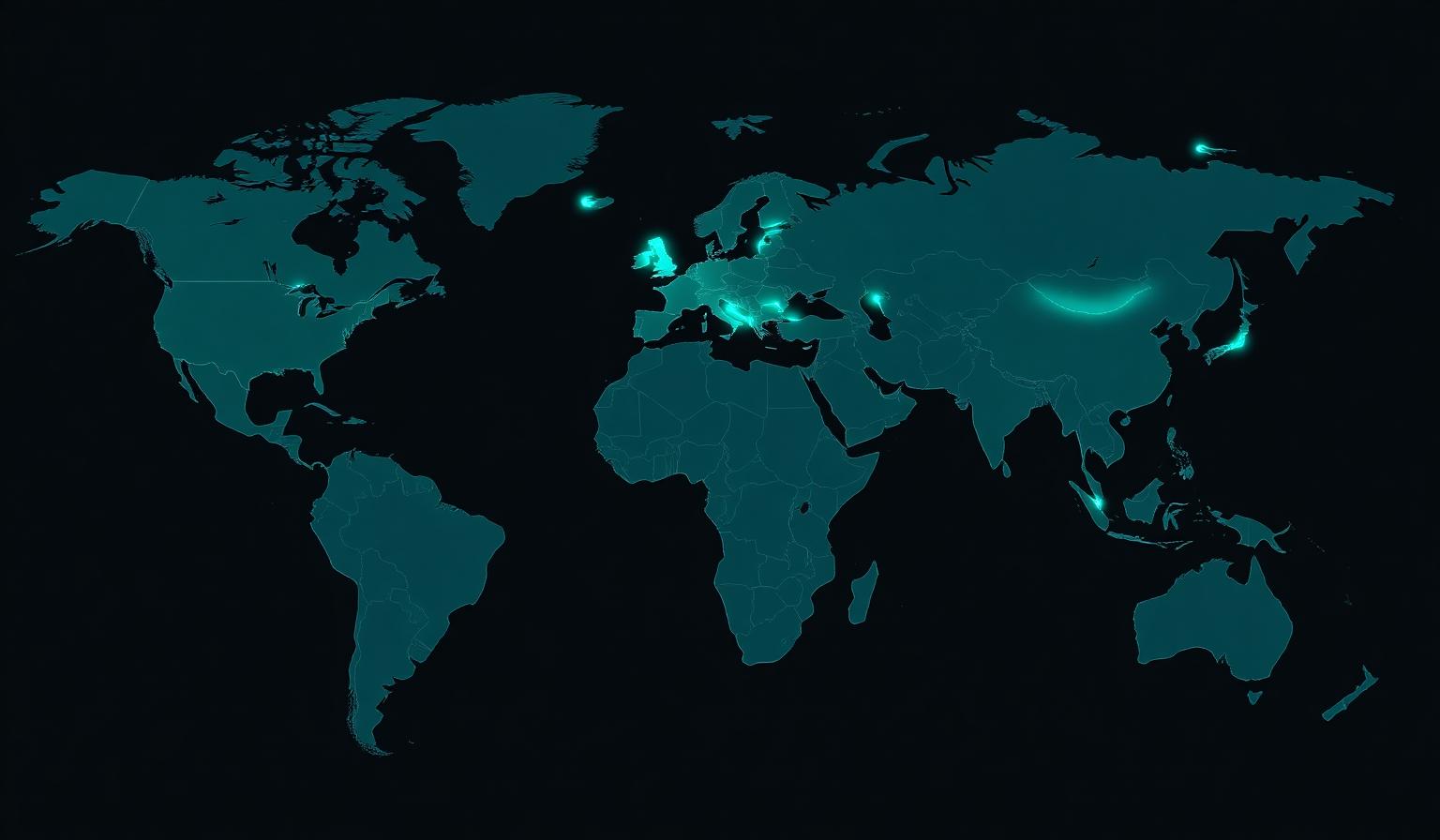
The architecture of the traditional financial system is rooted in the concept of territory. Banks operate within specific sovereign borders, subject to local charters and supervised by national regulators. Cryptocurrency, by design, ignores these boundaries. A digital asset can move from a cold wallet in Singapore to an exchange in the Cayman Islands via a decentralized protocol hosted on servers in Germany — all within the time it takes to brew a cup of coffee.
For law firms and digital forensic investigators, this borderless nature creates a fundamental tension: the crime is global, but the legal remedy is local. When a significant crypto fraud occurs, the "scene of the crime" is simultaneously everywhere and nowhere. Solving these cases requires more than just knowing where the money went; it requires blockchain forensics that can translate technical data into a format that satisfies the rigid evidentiary standards of multiple legal jurisdictions.
The Investigative Dichotomy: On-Chain Tracing vs. Off-Chain Attribution
In any cross-border crypto fraud investigation, there is a clear distinction between what the blockchain says and what the real world knows.
On-chain records are the "DNA" of the investigation. The public ledger provides an immutable, time-stamped history of every transaction. This data is globally accessible and cannot be altered by a suspect or a foreign government. However, on-chain data is pseudonymous. It tells us that Wallet A sent 50 BTC to Wallet B, but it does not tell us who owns Wallet B.
The difference is not in the visibility of the transaction, but rather in the attribution of the actor. This is where off-chain evidence becomes critical. Off-chain evidence includes KYC (Know Your Customer) records — identifying information held by Virtual Asset Service Providers (VASPs); service touchpoints — IP logs, login timestamps, and device fingerprints; and communication trails — emails, Telegram messages, and social engineering bait used to induce the victim.
A successful crypto fraud investigation must bridge this gap. Forensic analysts use sophisticated clustering algorithms to group seemingly unrelated addresses into a single "entity." Once a cluster is identified as belonging to a specific exchange or service, the investigation shifts from technical tracing to legal process.
Navigating the Global Labyrinth: MLATs and Law Enforcement Liaison
When funds are traced to a VASP located in a foreign jurisdiction, the investigator hits a "legal wall." A US-based private investigator or law firm cannot simply subpoena an exchange in the Seychelles and expect an immediate return of KYC data.
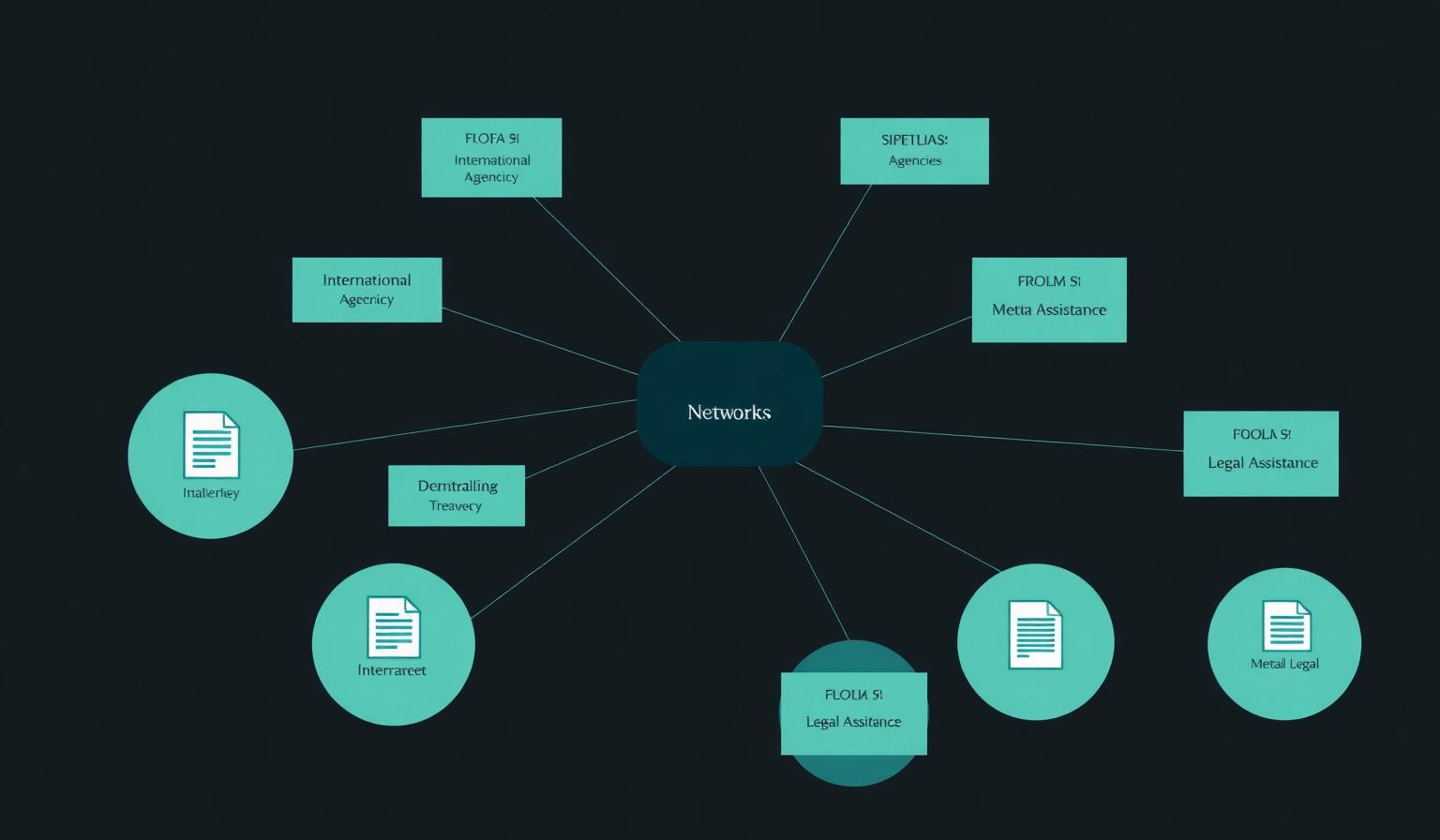
This is where the Mutual Legal Assistance Treaty (MLAT) process traditionally resides. MLATs are the formal mechanism by which countries share evidence for criminal investigations. However, the MLAT process is notoriously slow, often taking months or even years. In the world of digital assets, where funds can be "peeled" and "mixed" in seconds, the MLAT process is often outpaced by the speed of the fraudster.
Professional blockchain forensics serves as the "intelligence pre-cursor" to the formal legal request. By providing law enforcement and legal counsel with a high-fidelity forensic report, investigators can narrow the scope — instead of asking a foreign government to "investigate a fraud," the request is narrowed to "preserve data for these five specific transaction hashes"; establish dual criminality — many jurisdictions require that the act be a crime in both countries, so a clear forensic narrative that demonstrates fraud (inducement, misappropriation, and concealment) is essential; and facilitate "police-to-police" cooperation through organizations like Interpol or Europol, which can lead to the temporary freezing of assets before an MLAT is ever signed.
Technical Mechanics: The Strategy of Cross-Border Obfuscation
Sophisticated fraudsters utilize specific technical mechanisms to exploit jurisdictional friction. Understanding these tactics is essential for any digital forensic firm or law firm handling these cases.
"Peeling chains" is a common technique where a large amount of crypto is sent to a new address, a small portion is "peeled" off to an exchange or mixer, and the remainder is sent to another new address. This process is repeated hundreds of times across different blockchains. The goal is to create a "noise" floor that makes manual tracing impossible.
The use of "bridges" allows a suspect to move value from the Ethereum blockchain to the Binance Smart Chain or Bitcoin network. This "asset hopping" is often done to break the linear trail. Forensics must use cross-chain analytics to follow the value, ensuring that the "wrapped" or "bridged" assets are correctly accounted for.
Mixers like Tornado Cash (on Ethereum) or various Bitcoin tumblers attempt to sever the link between the source and destination of funds. While these services increase privacy, they do not provide absolute anonymity to a skilled forensic investigator. By analyzing the "input" and "output" patterns — often looking for identical amounts or specific temporal signatures — analysts can often de-mix transactions with a high degree of confidence.

Admissibility and the Strategy of "Court-Ready" Documentation
In multi-jurisdictional cases, the forensic report may be scrutinized by a New York judge, a Swiss prosecutor, and a Singaporean regulator. Each has different standards for what constitutes "expert testimony" and "authenticated evidence."
To ensure long-term utility, StonePath Investigations, LLC emphasizes a disciplined, structured approach to reporting. Documentation must move beyond "pretty pictures" of transaction maps and into the realm of forensic science. This includes methodological transparency — clearly stating which heuristics (e.g., "common input ownership") were used to cluster wallets; hash-based verification — every transaction cited must include its unique transaction hash (TXID), allowing any third party to verify the data on a block explorer; and preservation targets — identifying the specific "service touchpoints" where evidence is most likely to be found (e.g., the specific VASP that processed the "off-ramp" to fiat currency).
The question for legal counsel is not just "Can we find the money?" but rather "Is this evidence sustainable under cross-examination in a foreign court?" The answer depends entirely on the rigor of the initial forensic analysis.
The FATF Travel Rule and the Future of Cross-Border Evidence
The Financial Action Task Force (FATF) has introduced "Recommendation 16," commonly known as the Travel Rule. This requires VASPs to collect and share originator and beneficiary information for transactions above a certain threshold.
As more jurisdictions implement the Travel Rule, the "off-chain" data gap is slowly closing. However, the implementation is uneven. This "regulatory arbitrage" allows fraudsters to gravitate toward "dark" jurisdictions with lax AML (Anti-Money Laundering) enforcement.
Professional cryptocurrency tracing provides the strategic map necessary to navigate these safe havens. By identifying the specific exchanges that are non-compliant, investigators can help legal counsel pivot their strategy toward more cooperative jurisdictions or alternative asset recovery routes, such as targeting the financial "on-ramps" used by the perpetrators.
Conclusion: The Value of Clarity in Complexity
Multi-jurisdictional crypto fraud is not a technical problem that can be solved with software alone; it is a legal and investigative puzzle that requires a sophisticated understanding of both blockchain mechanics and international law.
The role of blockchain forensics is to provide a clear, authoritative narrative of what occurred. By focusing on the strategy of the situation — documenting the flow of funds, identifying the service touchpoints, and preparing court-ready reports — investigators provide law firms with the ammunition they need to pursue asset recovery across borders. In the end, the goal is not just to trace the assets, but to provide the clarity necessary for justice to be served, regardless of which flag is flying over the server. For more information on professional methodology, see our glossary of terms or explore our guide for law firms.
Cross-border crypto matters reward early, disciplined intelligence work. Contact StonePath Investigations, LLC for a forensic narrative built to survive cross-examination — in any jurisdiction.
Schedule a Free Consultation